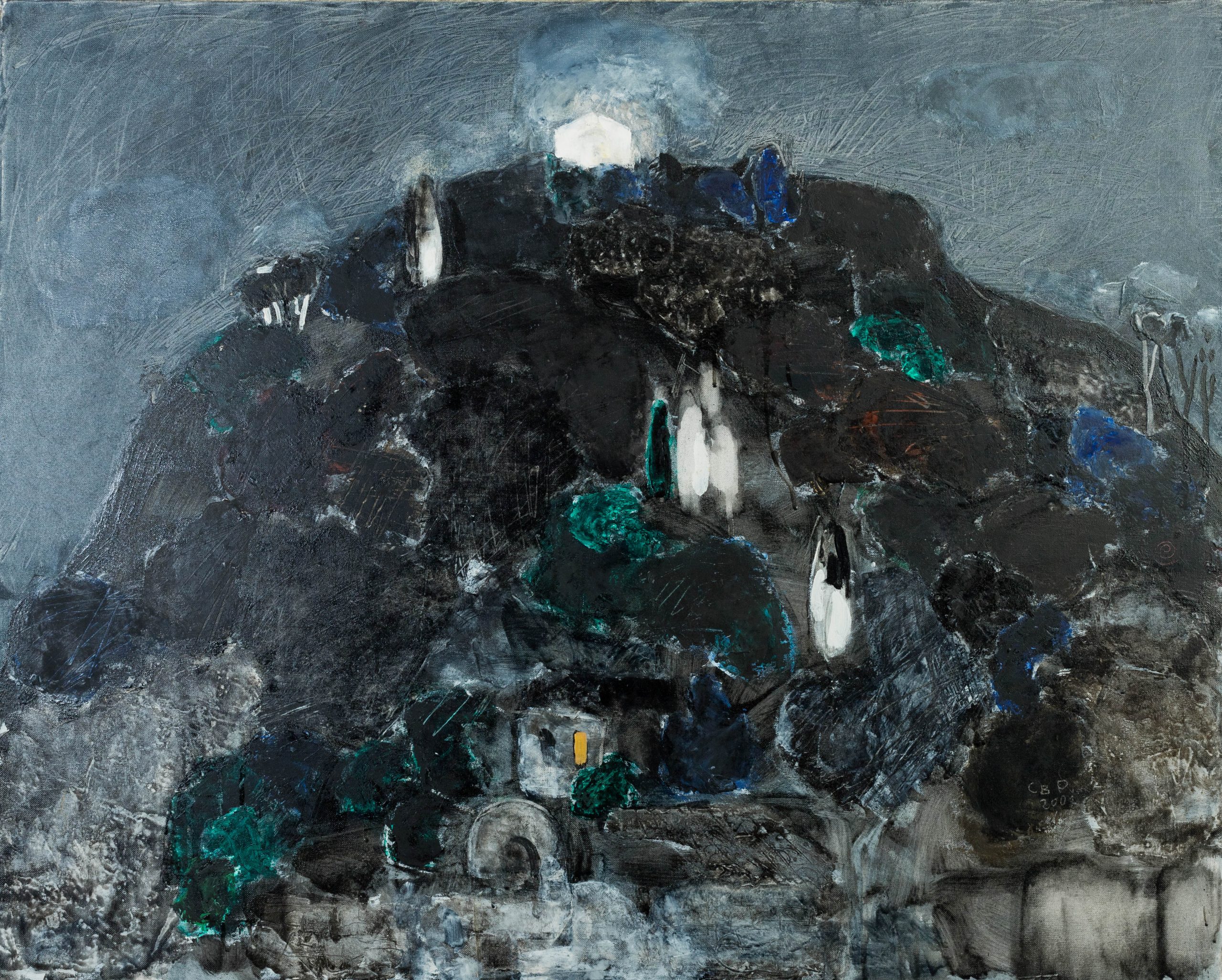
Varbitsa, 1933 – Sofia, 2018
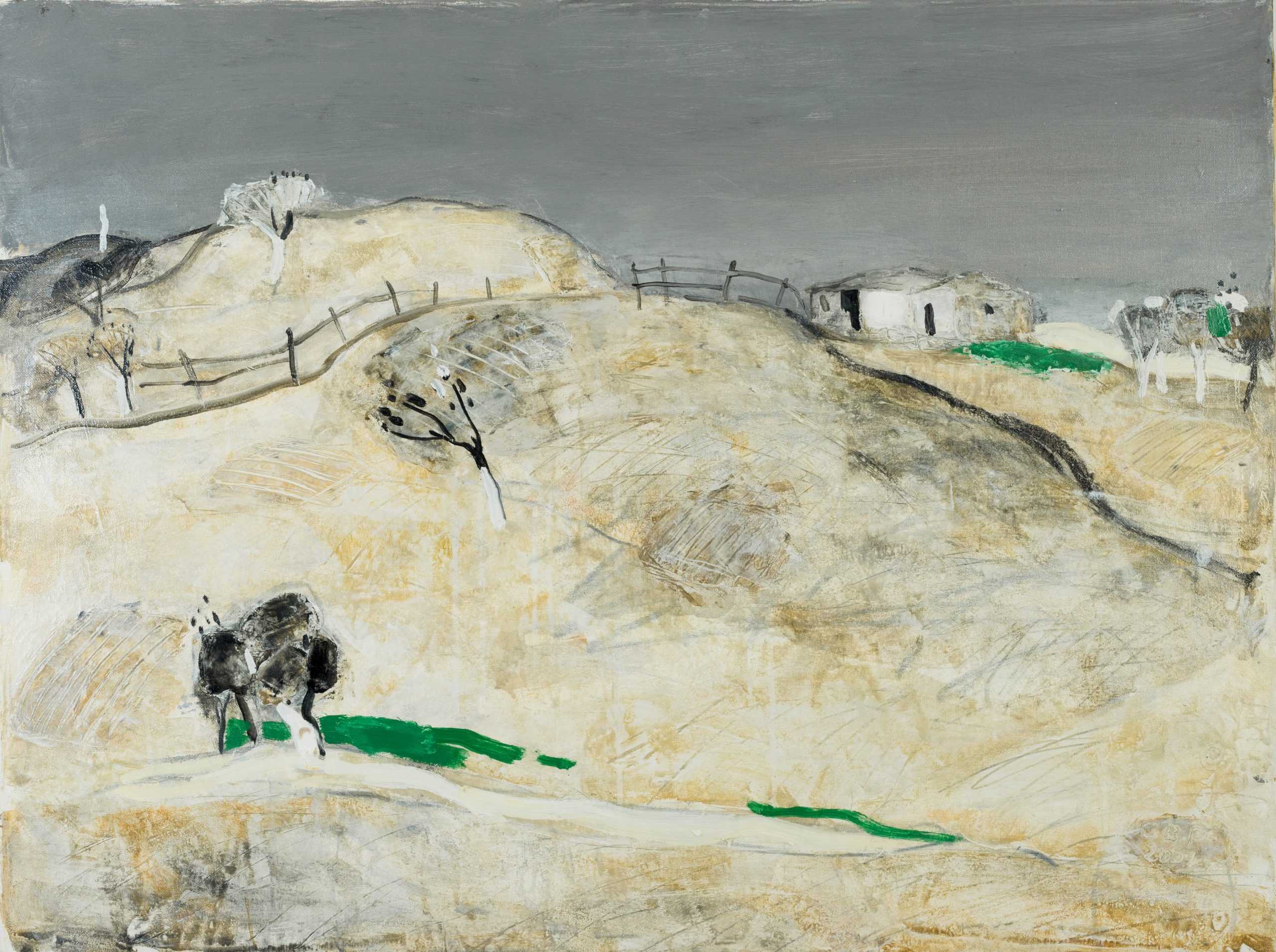
He was born in the village of Varbitsa, near Pleven. He studied painting under Dechko Ouzounov at the National Academy in Sofia, graduating in 1959. After graduation he lived in Pleven and Ruse (1961–1962), before settling permanently in Sofia in 1967. From early on, he distinguished himself not only for his talent but also for his organizational skills. From 1973 to 1985 he was president of the Union of Bulgarian Artists, and between 1985–1988 director of the National Gallery. In 1977 he was elected professor of painting at the Sofia Academy, soon becoming one of its leading teachers until his retirement. In 2003 he was elected a member of the Bulgarian Academy of Sciences. He was also active in politics: member of the Central Committee of the Bulgarian Communist Party (1976–1988) and member of Parliament until 1990. In 1984 he donated to his birthplace, Pleven, a large collection of Bulgarian, Asian, and African art, forming the nucleus of a permanent museum exhibition. He is regarded as one of the foremost Bulgarian artists, if not the most important of recent decades. Through his work, teaching, and administrative positions, he systematically served modern Bulgarian culture. His painting remained figurative over time. His early works were realist, in the spirit of socialist art. Gradually, his style became more personal, drawing on the great tradition of Modernism and especially the French neorealist trends of the interwar period. He painted nudes, still lifes, portraits, but gave his most significant work to landscape. With melancholy light, transcendent atmosphere, and abstracted treatment—drawing on French Symbolism and German Expressionism—his paintings became emotional renderings of the visible world through a deeply personal language. He exhibited extensively, both solo and in group shows, in Bulgaria and abroad. His last solo exhibition was hosted at Art Gallery, Sofia, in 2018; the following year, the same venue presented a retrospective in his memory. He undertook major public commissions, such as: the decoration of Sofia Central Railway Station (1976), the decoration of the National Palace of Culture (then called the Lyudmila Zhivkova People’s Palace of Culture, 1981), and the frescoes and icons for the Church of St. Petka Samardzhiyska in Rupite (1994). He received numerous awards during his career: gold medal and first prize at the First Youth Exhibition (1961), the Dimitrov Prize (1968, 1987), the National Painting Award Zachary Zograf (1973), the Grand Prize of the Union of Bulgarian Artists (1986), among others. In 2001 he was awarded the national Paisyi Hilendarski Prize, and in 2013 the Marin Drinov Prize of the Bulgarian Academy of Sciences. His works are preserved in Bulgaria’s major museums (National Gallery, Sofia City Art Gallery, etc.), in the Pushkin Museum in Moscow, and in other international museums, as well as in public and private collections.
Rusev, Svetlin (Русев, Светлин)
Category
Artists