Prilep, 1936 – Skopje, 2022
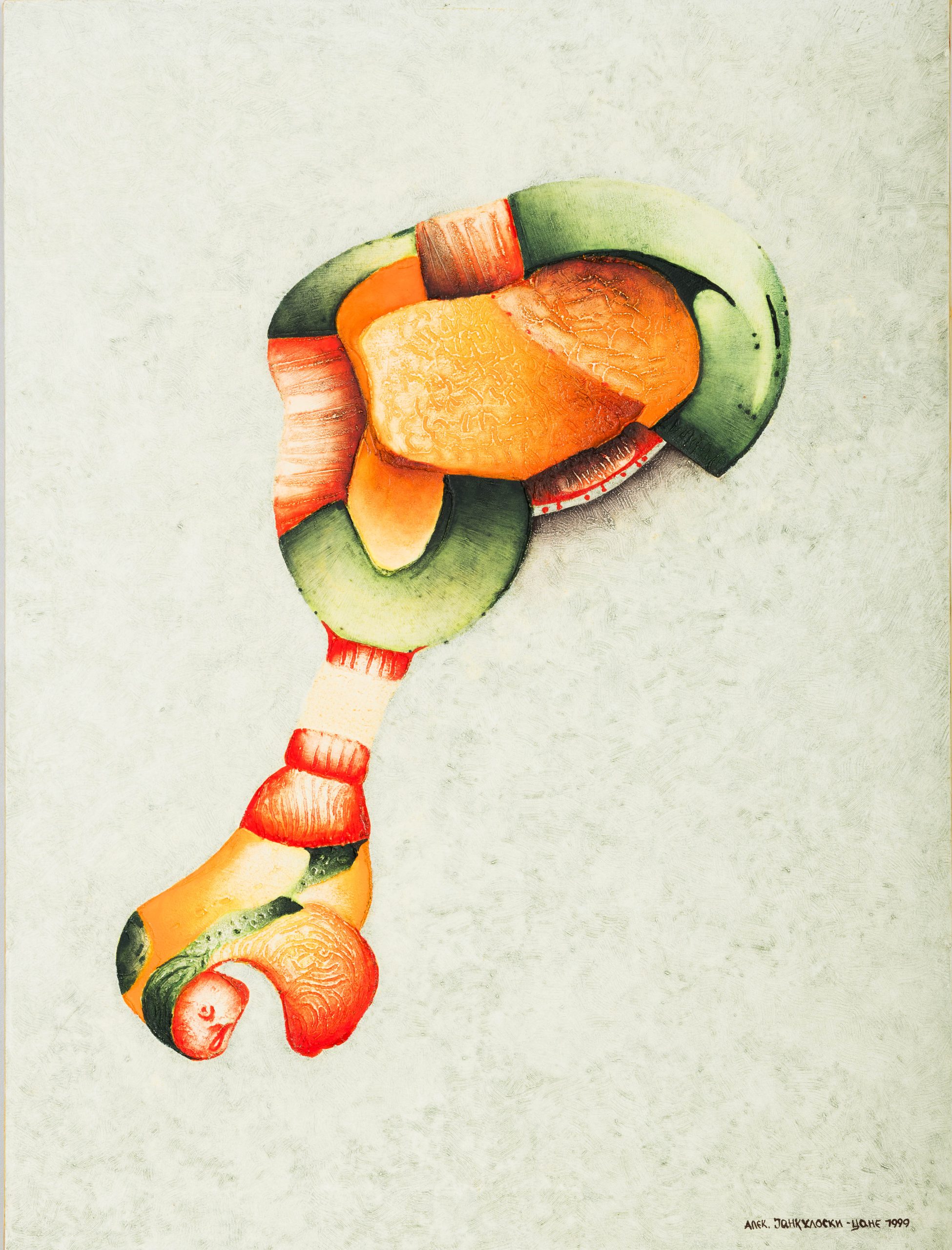
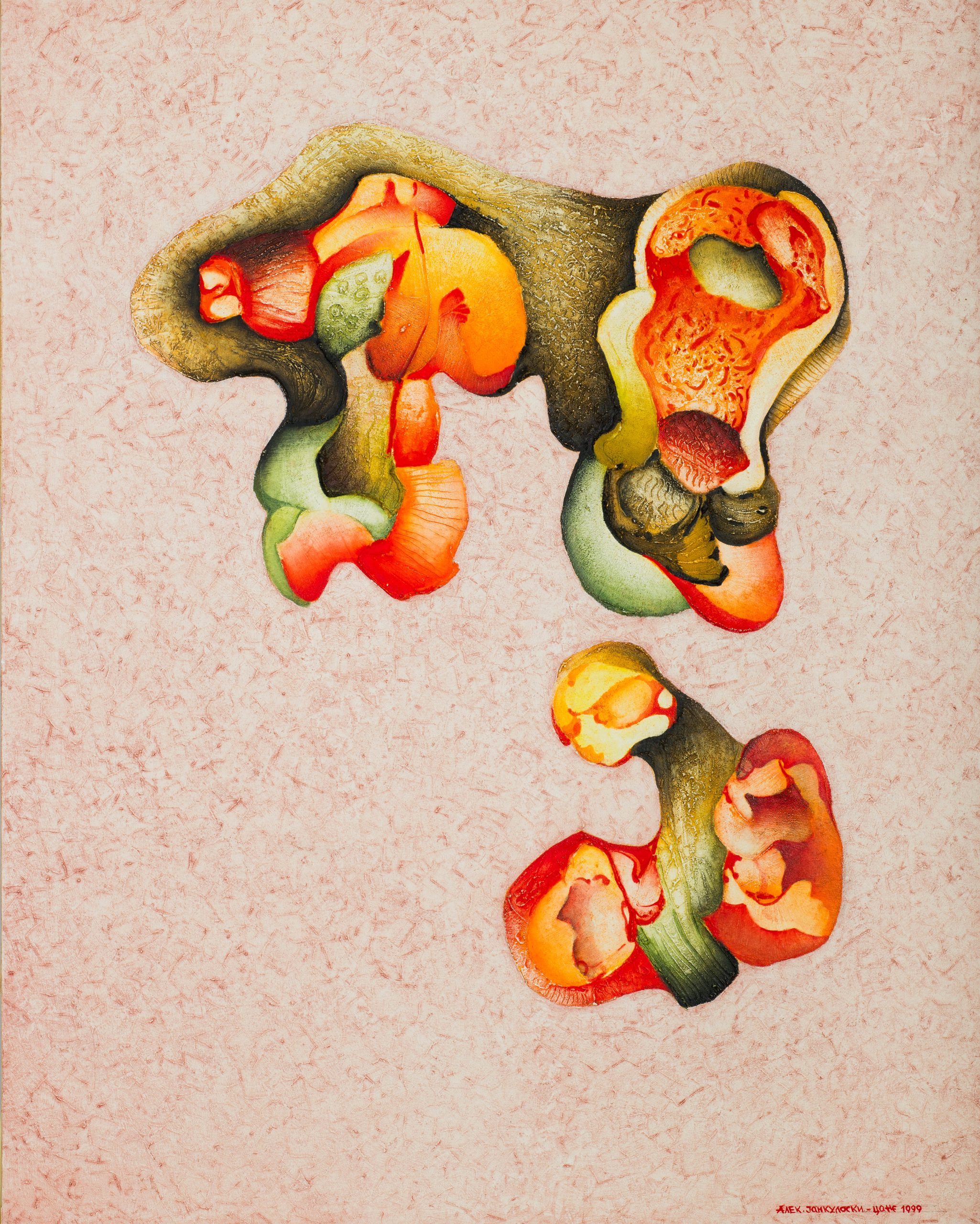
He was born in the village of Zagorani, near Prilep in North Macedonia. He studied in Skopje: at the School of Applied Arts (graduating in 1957), the Pedagogical Academy (1977–1979), and finally the Faculty of Fine Arts. Until the mid-1970s, he collaborated with painter Aleksandar Risteski and sculptor Naso Bekjarovski on monumental works, mainly murals, such as the decoration of the old Skopje railway station. Among his monumental works is the ‟Monument to the Fallen” in Sveti Nikole, a colossal realist sculpture. He was instrumental in founding numerous artists’ colonies in North Macedonia and abroad, where he also taught, contributing to the dissemination of contemporary art. Today, he is recognized as the father of contemporary art in North Macedonia, being the first to introduce abstract, non-figurative painting as early as 1960. At that t ime, he began using non-traditional materials (sand, sawdust, wood, and metal), creating strange textures and rough surfaces on the canvas. His inspiration came from the plant and animal world: bizarre forms resembling microbes, microorganisms, or unusual plants and fruits dominate his pictorial space, set against a nearly monochrome (usually pale) background. His first solo exhibition, held in 1961 at the University Dormitory Hall in Skopje, was a milestone for art in North Macedonia, as from the outset he showed an interest in modern art, distancing himself from the prevailing artistic doctrines of then-Yugoslavia. That same year, he exhibited in Belgium, the Netherlands, and Denmark, by invitation. From then on, he organized numerous solo shows in his country and abroad, while also participating in many group exhibitions. Notable among his recent exhibitions are a solo show at the Cultural Center of North Macedonia in Sofia (2009), the group exhibition ‟Small Format” at the Gallery of the Union of Artists in Plovdiv (2018), and the retrospective group exhibition ‟From the Repository of the International Art Colony” at the ‟Trajko Prokopiev” National Cultur
Jankulovski-Cane, Aleksandar (Јанкуловски – Цане, Александар)
Category
Artists