Sofia, 1927 – Sofia, 2022
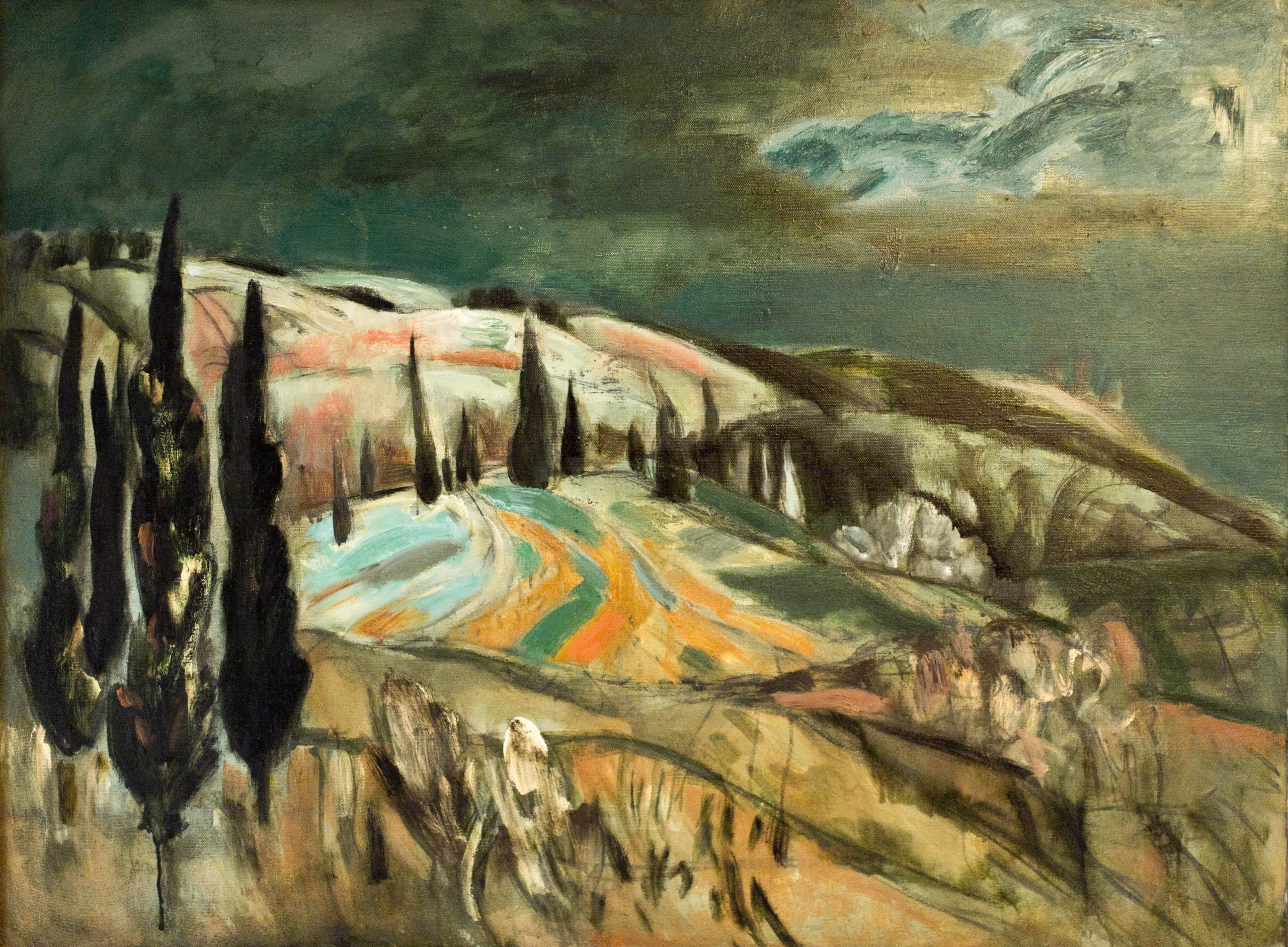
She was born in Sofia. Her father was journalist Petar Tasev from Bitola, and her mother Slavka Harizanova, daughter of revolutionary and publisher Lyubomir Harizanov. She studied painting at the National Academy of Arts under Dechko Uzunov and Iliya Petrov, graduating in 1952. From 1953 she was a member of the Union of Bulgarian Artists, and she was also a corresponding member of the Austrian Künstlerhaus association. Taseva is considered among the most important Bulgarian artists of the second half of the 20th century. Formed in the years after World War II, her early work followed the spirit of socialist, engaged art. In her paintings, especially of the 1970s, dominated idealized, heroic figures of ordinary people (mainly women) as well as historical heroes of the Bulgarian nation. After the fall of the socialist regime, her painting turned toward European Modernism. She dealt with landscape and still life, themes through which she created her most significant personal works, with references to Cézanne, Cubism, and above all Expressionism. Her later work is characterized by schematization and anti-realist color. She presented her work in solo and group exhibitions in Bulgaria and abroad. Her paintings are in the country’s most important museums (National Gallery, Sofia City Gallery, etc.) and private collections. In 2024 the Bulgarian National Gallery organized the first retrospective of her work, curated by Boryana Valchanova. She received many awards, including the Vladimir Dimitrov Award (the highest national award for painting, 1974), the National Painting Award Zachary Zograf (1975), the First Class Medal of the People’s Republic of Bulgaria (1984), and the First Class Medal of Saints Cyril and Methodius (2008), testament to the recognition of her artistic value.
Taseva, Kalina (Тасева, КАЛИНА)
Category
Artists